How to Compare Two Loan Offers Beyond the Interest Rate
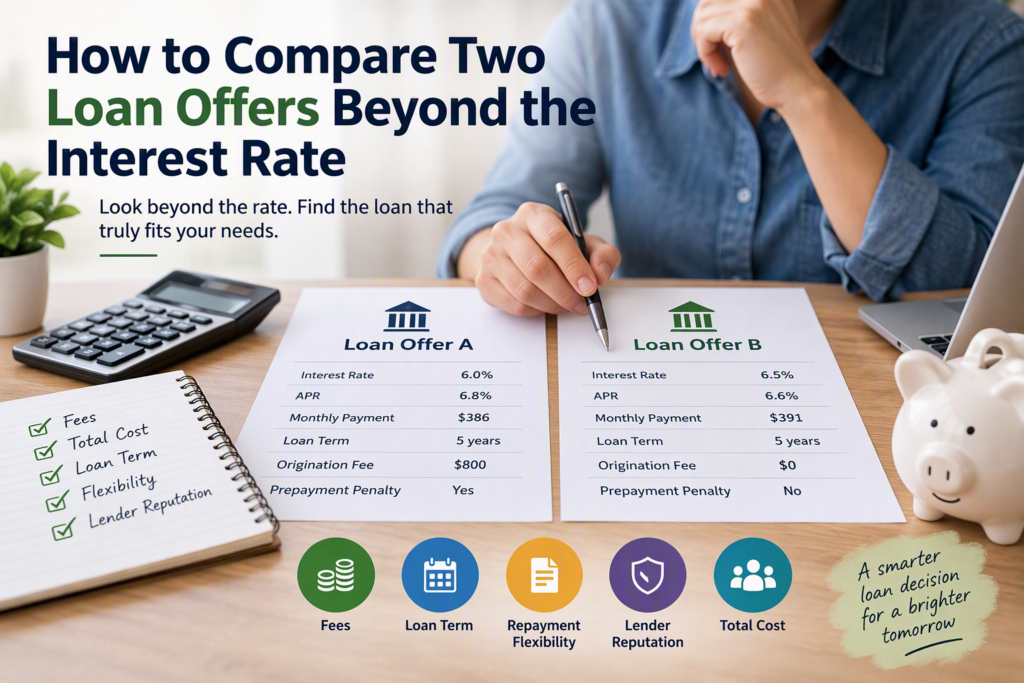
When comparing two loan offers, the interest rate is only part of the story. The better loan is often the one with the lower total borrowing cost, fewer fees, more flexible repayment options, and terms that fit your financial situation. A loan with a slightly higher interest rate can sometimes cost less overall than a loan with a lower advertised rate once fees and other charges are included.
If you’re deciding between two lenders, understanding what to compare can save you hundreds or even thousands of dollars over the life of the loan.
Why Interest Rate Alone Can Be Misleading
Most borrowers naturally focus on the interest rate because it is the most visible number in a loan offer. However, lenders can structure loans differently. Some may advertise a lower rate while charging higher fees. Others may offer a slightly higher rate but fewer upfront costs or more favorable repayment terms.
For example:
- Loan A: 6.0% interest rate with high origination fees
- Loan B: 6.5% interest rate with no origination fee
Depending on the loan amount and repayment period, Loan B could end up costing less overall.
Looking at the complete cost of borrowing provides a more accurate comparison.
Start With the Annual Percentage Rate (APR)
One of the quickest ways to compare loans is to check the Annual Percentage Rate (APR).
APR includes:
- Interest charges
- Certain lender fees
- Loan-related costs that affect borrowing expenses
Because APR reflects more than the basic interest rate, it often provides a better comparison between competing offers.
Example
Imagine two personal loans:
| Loan | Interest Rate | APR |
|---|---|---|
| Loan A | 7.0% | 8.4% |
| Loan B | 7.5% | 7.8% |
Although Loan A has the lower interest rate, its higher fees increase the APR. Loan B may actually be the less expensive option.
APR is not perfect because different loan types may include different costs, but it is usually one of the most useful comparison tools available.
Compare the Total Cost of the Loan
The most important number is often the total amount you will repay over the life of the loan.
Calculate:
Total Repayment = Monthly Payments + Fees + Other Loan Costs
A loan can look attractive at first glance but become expensive over time because of:
- Longer repayment periods
- Larger total interest charges
- Added fees
Request a loan amortization schedule or payoff estimate whenever possible. This shows exactly how much money you will pay from start to finish.
Worked Example
Assume you need to borrow $20,000.
Offer A
- Interest rate: 6%
- Term: 5 years
- Origination fee: $800
Offer B
- Interest rate: 6.5%
- Term: 5 years
- Origination fee: $0
Even though Offer A has the lower rate, the fee may offset much of its advantage. Comparing total repayment amounts reveals which loan is actually cheaper.
Evaluate Loan Fees Carefully
Many borrowers underestimate the impact of fees.
Common loan fees include:
Origination Fees
Charged for processing or issuing the loan. Typically deducted from your loan proceeds or added to the balance.
Application Fees
Some lenders charge non-refundable fees simply for processing an application.
Underwriting Fees
Used to cover the lender’s review process.
Documentation Fees
Charges associated with preparing loan documents.
Late Payment Fees
Costs incurred if you miss a payment deadline.
Prepayment Penalties
Fees charged when you repay the loan early.
A loan with minimal fees often provides better value, even if the interest rate is slightly higher.
Check the Loan Term
The repayment period significantly affects your costs.
Shorter Loan Terms
Advantages:
- Lower overall interest expense
- Faster debt repayment
- Less money paid over time
Disadvantages:
- Higher monthly payments
Longer Loan Terms
Advantages:
- Smaller monthly payments
- Easier immediate cash-flow management
Disadvantages:
- Higher lifetime borrowing costs
- More interest paid over time
When comparing loans, determine whether the payment fits comfortably into your budget without extending the repayment period unnecessarily.
Analyze Monthly Payment Affordability
A low-cost loan is not automatically the best loan if the monthly payment strains your finances.
Ask yourself:
- Can I comfortably make the payment every month?
- Do I have room for emergencies?
- Would the payment limit other financial goals?
Financial flexibility matters.
Missing payments can trigger:
- Late fees
- Credit score damage
- Collection activity
- Additional interest costs
Choose a payment amount that remains manageable under realistic circumstances, not just under ideal conditions.
Determine Whether the Rate Is Fixed or Variable
Loan pricing structures can differ dramatically.
Fixed-Rate Loans
The interest rate remains unchanged throughout the repayment period.
Benefits:
- Predictable monthly payments
- Easier budgeting
- Protection against rising rates
Variable-Rate Loans
The interest rate can increase or decrease according to market conditions.
Benefits:
- Lower starting rates may be available
Risks:
- Payments can increase
- Total borrowing cost becomes less predictable
When comparing a fixed-rate offer with a variable-rate offer, do not focus solely on the initial rate. Consider how rising rates could affect future payments.
Review Early Repayment Options
Many borrowers pay off loans ahead of schedule.
This may happen because of:
- Salary increases
- Bonuses
- Tax refunds
- Debt consolidation
- Asset sales
Some lenders encourage early repayment while others impose restrictions.
Look for:
- No prepayment penalties
- Partial extra payment options
- Flexible lump-sum repayment provisions
A loan that allows early payoff without penalties can provide substantial savings over time.
Understand How Interest Is Calculated
Not all loans calculate interest in the same way.
Common methods include:
- Simple interest
- Amortized interest
- Daily interest calculations
These methods affect:
- Monthly payments
- Interest accumulation
- Savings from early repayment
If one lender calculates interest daily while another uses a different structure, repayment costs can vary despite similar advertised rates.
Ask lenders to explain their interest calculation methods in plain language before making a decision.
Assess Lender Reputation and Service
The cheapest loan is not always the best experience.
Customer service matters when dealing with:
- Payment questions
- Account issues
- Hardship requests
- Loan modifications
- Payoff processing
Consider evaluating:
- Customer reviews
- Complaint histories
- Transparency of fees
- Clarity of loan documents
- Responsiveness during the application process
A lender that communicates clearly and fairly can save considerable frustration in the future.
Compare Borrower Protection Features
Some loans include features designed to help borrowers during difficult situations.
These can include:
- Payment deferral programs
- Temporary hardship assistance
- Forbearance options
- Flexible payment dates
- Modification programs
These protections may not affect daily loan costs but can become valuable during financial challenges.
A slightly more expensive loan with stronger protections may offer better overall value.
Watch for Promotional Offers and Introductory Rates
Some lenders advertise highly attractive initial terms.
Examples include:
- Introductory rates
- Temporary payment reductions
- Deferred interest promotions
- Cashback incentives
Before accepting these offers, determine:
- When terms change
- How rates adjust
- Whether fees apply later
- The long-term borrowing cost
Focus on the full life-cycle cost of the loan rather than short-term marketing incentives.
Compare Secured and Unsecured Loans Carefully
If your options include both secured and unsecured loans, pay close attention to risk.
Secured Loans
Backed by collateral such as:
- Vehicles
- Savings accounts
- Property
Benefits:
- Lower rates may be available
Risks:
- Collateral can be repossessed or seized if you default
Unsecured Loans
No collateral required.
Benefits:
- Less risk to assets
Drawbacks:
- Higher rates may apply
A lower interest rate is not always worth exposing valuable property to potential loss.
Use a Loan Comparison Checklist
Before choosing between two loan offers, compare each of the following:
| Factor | Loan A | Loan B |
|---|---|---|
| APR | ||
| Interest Rate | ||
| Total Repayment Cost | ||
| Monthly Payment | ||
| Loan Term | ||
| Origination Fees | ||
| Other Fees | ||
| Fixed or Variable Rate | ||
| Prepayment Penalty | ||
| Hardship Programs | ||
| Customer Service Reputation | ||
| Collateral Required |
Completing this checklist often reveals differences that are easy to overlook when focusing only on rates.
Common Loan Comparison Mistakes
Choosing the Lowest Rate Automatically
The lowest rate does not necessarily mean the lowest overall borrowing cost.
Ignoring Fees
Fees can substantially increase the effective price of a loan.
Focusing Only on Monthly Payments
Lower payments often result from longer terms, which usually increase total interest costs.
Overlooking Prepayment Rules
Restrictions on early repayment may reduce flexibility and increase total costs.
Skipping the Fine Print
Important conditions are frequently disclosed within the loan agreement itself.
Always review loan documents carefully before signing.
Frequently Asked Questions
Is APR always more important than interest rate?
For comparing overall cost between similar loan products, APR is usually more useful because it incorporates certain loan fees along with interest charges.
Can a higher interest rate loan be cheaper?
Yes. A higher-rate loan may cost less overall if it has significantly lower fees or a shorter repayment period.
Should I choose the loan with the lowest monthly payment?
Not necessarily. Lower monthly payments often mean longer repayment periods and higher lifetime interest costs.
Does paying off a loan early save money?
In many cases, yes. Early repayment can reduce interest expenses, but you should verify whether any prepayment penalties apply.
What is the single most important factor when comparing loans?
For most borrowers, total borrowing cost combined with affordability provides the clearest picture. The lowest-cost loan is only beneficial if the payments fit comfortably within your budget.
Make Your Decision Based on Total Value
Comparing two loan offers effectively requires looking beyond the headline interest rate. Evaluate APR, total repayment cost, fees, loan term, payment affordability, repayment flexibility, and lender policies before making a choice.
A thoughtful comparison takes a little extra time, but it can prevent costly mistakes and help you select a loan that supports your financial goals both now and over the life of the debt