Essential Lesson: Lower Monthly Payments May Cost More
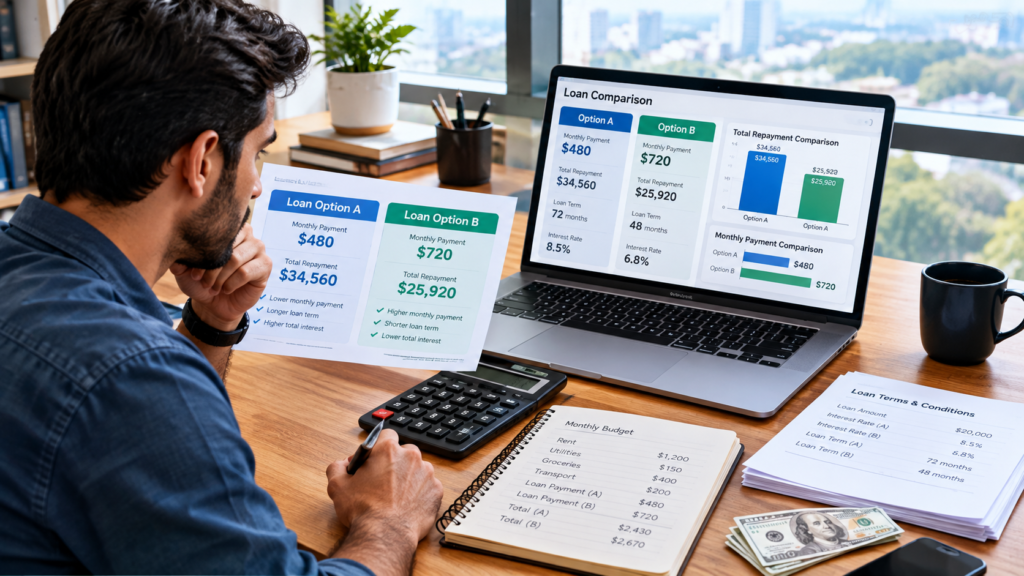
A lower monthly loan payment may seem like an easy way to make borrowing more affordable. It can actually increase the total amount you pay over the life of the loan. Lenders often extend the repayment term to achieve the lower payment.
Lower Monthly Loan Payment Can Cost More Overall because interest accumulates over a longer period. The smaller payment may help with budget planning now, but the total cost rises. Understand how term length and total interest influence what you ultimately pay.
Understanding how loan payments work can help you avoid expensive mistakes and choose a financing option that fits both your monthly budget and your long-term financial goals.
Why Lower Monthly Payments Look Attractive
Most borrowers focus on one number when comparing loans: the monthly payment.
This makes sense. Monthly obligations affect your day-to-day finances and determine whether a loan feels affordable. A lower payment can:
- Reduce pressure on your monthly budget
- Free up cash for other expenses
- Make it easier to qualify for a loan
- Provide more flexibility during financial uncertainty
However, lenders know that many borrowers focus primarily on the monthly payment rather than the total cost of borrowing. As a result, loan offers are often structured to highlight affordability while the long-term expense receives less attention.
The key question should never be:
“How low can I get my monthly payment?”
Instead, ask:
“How much will this loan cost me overall?”
The Relationship Between Loan Payments and Loan Terms
A monthly loan payment is generally determined by three factors:
- The amount borrowed
- The interest rate
- The repayment period
When lenders want to lower the monthly payment without changing the amount borrowed, they often extend the repayment term.
For example:
- Loan Amount: $20,000
- Interest Rate: 6%
A 3-year loan requires higher payments because the balance is repaid quickly.
A 7-year loan spreads the same balance over a much longer period, reducing the monthly payment.
At first glance, the longer loan appears more affordable. But because interest is charged for additional years, the total amount repaid increases significantly.
A Simple Example
Let’s compare two loans with the same balance and interest rate.
| Loan Option | Loan Amount | Interest Rate | Term | Monthly Payment | Total Paid |
|---|---|---|---|---|---|
| Option A | $20,000 | 6% | 3 Years | About $608 | About $21,888 |
| Option B | $20,000 | 6% | 7 Years | About $292 | About $24,528 |
The 7-year loan lowers the monthly payment by more than half.
That sounds great until you notice the total repayment.
- 3-year loan interest: about $1,888
- 7-year loan interest: about $4,528
In exchange for a smaller monthly payment, the borrower pays roughly $2,640 more in interest.
The lower payment feels cheaper each month, but the loan costs significantly more overall.
How Interest Accumulates Over Time
Interest is the lender’s fee for allowing you to borrow money.
The longer your debt remains unpaid, the more interest you generally pay.
Think of interest like a daily or monthly rental charge on borrowed money. When the loan term stretches from three years to seven years, you are effectively renting that money for longer.
Even if the interest rate stays exactly the same, additional years of borrowing create additional interest costs.
This is why extending a loan term often reduces the payment while simultaneously increasing the total cost.
Common Situations Where This Happens
Auto Loans
Car buyers frequently encounter this issue.
A dealership may present multiple payment options:
- 48 months
- 60 months
- 72 months
- 84 months
The longer options usually have lower monthly payments.
For example, extending a vehicle loan from five years to seven years may reduce the monthly payment substantially. However, the borrower can end up paying thousands more in interest before the loan is finished.
Long loan terms can also increase the risk of becoming “upside down” on a vehicle, meaning the remaining loan balance exceeds the car’s value.
Mortgages
Home loans provide another example.
A 30-year mortgage typically has a lower monthly payment than a 15-year mortgage for the same loan amount.
However, the longer repayment period often results in dramatically higher lifetime interest expenses.
Many homeowners choose longer terms because the monthly payment fits their budget better. That’s not necessarily wrong, but it’s important to understand the trade-off.
Lower monthly costs often mean higher total borrowing costs.
Personal Loans
Personal loans are commonly marketed using affordable monthly payments.
Borrowers may see offers emphasizing:
- Small monthly obligations
- Flexible repayment terms
- Easy approval
While these features can be useful, extending repayment periods can increase interest expenses substantially.
Always compare the total cost of the loan rather than focusing only on the payment amount.
Student Loans
Student loans can offer long repayment periods to keep monthly payments manageable.
While lower payments can help graduates early in their careers, longer repayment plans generally lead to higher total interest costs.
Many borrowers are surprised to discover how much additional interest accumulates over extended repayment periods.
When a Lower Payment Is Not Necessarily Bad
Lower monthly payments are not automatically a poor financial choice.
In some situations, choosing a lower payment may be reasonable.
Examples include:
- Temporary income limitations
- Building an emergency fund
- Managing high-priority expenses
- Avoiding missed payments
- Maintaining financial stability during uncertain periods
The problem arises when borrowers assume a lower monthly payment means a better loan.
A lower payment is simply one factor among many.
The best loan often balances affordability with minimizing total borrowing costs.
The Psychological Trap of Monthly Payments
One reason people overlook total loan cost is that monthly payments are easier to understand.
Consider these two statements:
- “Your payment will be only $275 per month.”
- “You’ll pay $5,000 more in interest over the life of the loan.”
Many borrowers emotionally respond to the first number because it affects their monthly budget.
The second number feels distant and less urgent.
Lenders and advertisers understand this tendency, which is why marketing frequently emphasizes affordability rather than lifetime cost.
Before agreeing to a loan, step back and look at the complete financial picture.
Questions to Ask Before Accepting a Loan
Whenever you compare financing offers, ask these questions:
What Is the Total Amount Repaid?
Focus on the complete repayment amount instead of only the monthly obligation.
This reveals the true cost of the loan.
How Much Interest Will I Pay?
Knowing the total interest expense can expose major differences between seemingly similar loan offers.
Can I Afford a Shorter Term?
A shorter repayment period often increases the monthly payment but reduces long-term costs.
If your budget allows it, the savings can be substantial.
Is There a Prepayment Penalty?
Some lenders charge fees for paying a loan off early.
A loan without prepayment penalties provides greater flexibility.
What Happens If My Financial Situation Changes?
Consider whether the loan remains manageable if your income decreases or expenses increase.
A loan should fit not only your current situation but also potential future challenges.
Comparing Loans the Right Way
When evaluating loan offers, avoid looking at monthly payments alone.
Compare these factors side by side:
| Factor | Why It Matters |
|---|---|
| Loan Amount | Determines how much you’re borrowing |
| Interest Rate | Affects borrowing costs |
| Repayment Term | Influences monthly payments and total interest |
| Total Interest Paid | Shows the cost of borrowing |
| Total Amount Repaid | Reveals the full financial commitment |
| Fees and Charges | Can increase overall costs |
A loan with a slightly higher monthly payment can often save hundreds or even thousands of dollars over time.
Common Misconceptions About Lower Payments
“Lower Payments Mean a Better Deal”
Not necessarily.
A lower payment may simply result from a longer repayment period, leading to higher total costs.
“The Interest Rate Is All That Matters”
Interest rates are important, but loan length matters too.
A low interest rate combined with a very long term can still produce significant interest expenses.
“I Can Always Refinance Later”
Refinancing may be possible, but it is never guaranteed.
Qualification standards, interest rates, and financial circumstances can change.
A loan decision should make sense based on current facts rather than future assumptions.
“A Few Extra Years Won’t Matter”
Even small extensions can increase total borrowing costs considerably.
Additional months or years provide more time for interest to accumulate.
Strategies to Reduce the Total Cost of a Loan
If you want to minimize borrowing costs, consider these approaches:
Choose the Shortest Affordable Term
A shorter repayment period usually reduces total interest.
The goal is not to choose the shortest possible term but the shortest term that comfortably fits your budget.
Make Extra Payments
Additional payments can reduce the principal balance faster.
As the balance declines, less interest accumulates.
Improve Your Credit Before Borrowing
Better credit scores often help borrowers qualify for lower interest rates.
Even a small rate reduction can produce meaningful savings over time.
Shop Around
Different lenders may offer significantly different rates, fees, and repayment structures.
Comparing multiple offers can lead to a better overall deal.
Borrow Only What You Need
The less money borrowed, the less interest you’ll generally pay.
Carefully evaluate whether every dollar borrowed is necessary.
Frequently Asked Questions
Is a lower monthly payment always more expensive?
No. A lower payment is not always more expensive, but it often becomes more expensive when it results from extending the loan term. The total cost depends on the interest rate, loan length, and any fees.
Why does extending a loan term increase costs?
Extending the repayment period usually means interest accrues for a longer time. Even if the interest rate remains unchanged, total interest expenses often increase.
Should I choose the loan with the lowest monthly payment?
Not automatically. Compare the total interest and total repayment amount before making a decision. A slightly higher payment may save significant money over time.
Can extra payments offset a longer loan term?
Often, yes. Making additional payments can reduce the principal balance faster and decrease total interest costs, provided the lender does not charge prepayment penalties.
What matters more: monthly payment or total loan cost?
Both matter. Monthly payments must fit your budget, but total loan cost determines how much the loan actually costs over time. The best choice balances affordability and overall expense.
Make Decisions Based on Total Cost, Not Just Monthly Payment
A lower monthly loan payment can provide breathing room in your budget, but it does not mean you’re spending less. This often comes from stretching the loan over a longer period. In that case, Lower Monthly Loan Payment Can Cost More Overall due to accumulated interest.
Before signing any loan agreement, look beyond the monthly payment. Review the repayment term, total interest, fees, and full amount you’ll pay over the life of the loan. A loan that costs slightly more each month may ultimately save you a significant amount of money and help you become debt-free sooner.