How to Build a Monthly Budget Using Take-Home Pay
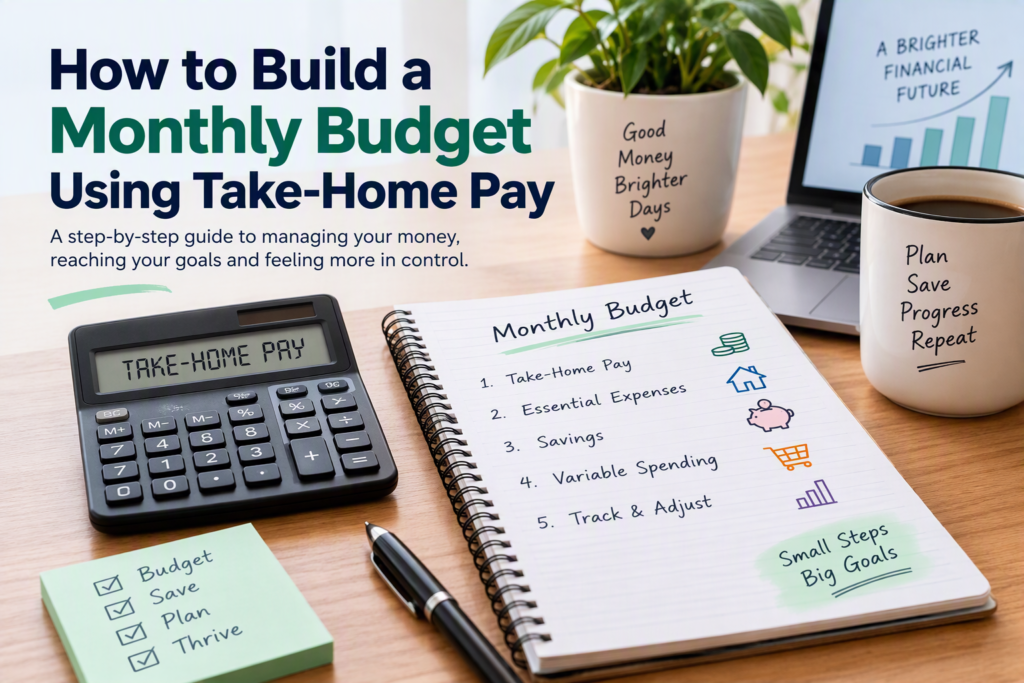
A monthly budget should be built around your take-home pay, not your gross salary. Take-home pay is the money that actually reaches your bank account after taxes, retirement contributions, insurance premiums, and other deductions. By budgeting with the amount you can truly spend, you create a realistic plan that helps cover essentials, achieve financial goals, and reduce the risk of overspending.
Whether you’re managing your first paycheck, supporting a family, or trying to regain control of your finances, a take-home-pay budget provides a practical framework for every financial decision.
What Is Take-Home Pay?
Take-home pay, often called net pay, is the amount you receive after all deductions are removed from your gross income.
For example:
| Income Type | Amount |
|---|---|
| Gross Monthly Salary | $5,000 |
| Taxes | -$800 |
| Health Insurance | -$200 |
| Retirement Contributions | -$250 |
| Other Deductions | -$50 |
| Take-Home Pay | $3,700 |
In this example, your budget should be based on $3,700, not $5,000.
Many people get into financial trouble because they build spending plans around their gross income, creating an unrealistic picture of what is actually available each month.
Why Budgeting With Take-Home Pay Works
Using take-home pay provides several advantages:
- Prevents overspending
- Reflects your real financial situation
- Makes savings goals more achievable
- Helps manage debt effectively
- Reduces financial stress
- Creates a sustainable spending plan
When every dollar is assigned a purpose based on the money you actually receive, it becomes easier to stay consistent and avoid relying on credit cards or loans.
Step 1: Calculate Your Monthly Take-Home Pay
If you’re paid a fixed salary, finding your monthly take-home pay is straightforward.
Review:
- Recent pay stubs
- Direct deposit records
- Bank statements
- Payroll portals
For workers with irregular income, such as freelancers, contractors, or commission-based employees, calculate an average over the last six to twelve months.
Example
Suppose your recent net income was:
| Month | Take-Home Pay |
|---|---|
| January | $3,400 |
| February | $3,800 |
| March | $3,600 |
| April | $3,500 |
| May | $3,900 |
| June | $3,700 |
Average monthly take-home pay:
($3,400 + $3,800 + $3,600 + $3,500 + $3,900 + $3,700) ÷ 6 = $3,650
Your budget should be built around approximately $3,650 per month.
Step 2: List Your Essential Expenses
Essential expenses are the costs required to maintain your basic lifestyle and obligations.
Common necessities include:
- Housing
- Utilities
- Groceries
- Transportation
- Insurance
- Healthcare
- Debt minimum payments
- Childcare
- Phone and internet services
Create a complete list and record the average monthly amount for each category.
Example Essential Expenses
| Expense | Monthly Cost |
|---|---|
| Rent | $1,200 |
| Utilities | $150 |
| Groceries | $450 |
| Transportation | $250 |
| Insurance | $150 |
| Phone and Internet | $100 |
| Debt Payments | $300 |
| Total Essentials | $2,600 |
Knowing these fixed and necessary expenses helps determine how much flexibility remains in your budget.
Step 3: Include Savings as a Monthly Expense
Many people save whatever money remains at the end of the month. Unfortunately, there is often little or nothing left.
A more effective approach is to treat savings as a required monthly expense.
Possible savings goals include:
- Emergency fund
- Retirement contributions
- Home down payment
- Education expenses
- Vacation fund
- Major purchases
Example
Monthly take-home pay: $3,700
Planned savings:
| Goal | Amount |
|---|---|
| Emergency Fund | $150 |
| Retirement Savings | $150 |
| Vacation Fund | $50 |
| Total Savings | $350 |
By scheduling savings before discretionary spending, financial goals receive consistent attention.
Step 4: Allocate Money for Variable Spending
After covering necessities and savings, allocate funds for flexible lifestyle spending.
Examples include:
- Dining out
- Entertainment
- Streaming subscriptions
- Hobbies
- Clothing
- Personal care
- Gifts
- Travel
These categories should reflect your priorities while remaining affordable.
Example
| Category | Amount |
|---|---|
| Dining Out | $120 |
| Entertainment | $80 |
| Clothing | $50 |
| Personal Care | $50 |
| Miscellaneous | $100 |
| Total | $400 |
Variable spending should not create pressure on essential expenses or savings goals.
Step 5: Use a Budgeting Framework
A budgeting framework can simplify decision-making and provide general spending targets.
The 50/30/20 Rule
This popular method divides take-home pay into three categories:
- 50% for needs
- 30% for wants
- 20% for savings and debt reduction
Example using $4,000 monthly take-home pay:
| Category | Percentage | Amount |
|---|---|---|
| Needs | 50% | $2,000 |
| Wants | 30% | $1,200 |
| Savings and Debt | 20% | $800 |
This method works well for people seeking a simple starting point.
Zero-Based Budgeting
With zero-based budgeting, every dollar receives an assignment.
Example:
| Category | Amount |
|---|---|
| Housing | $1,200 |
| Food | $450 |
| Utilities | $150 |
| Transportation | $250 |
| Savings | $350 |
| Debt Payments | $300 |
| Personal Spending | $300 |
| Miscellaneous | $200 |
| Total | $3,200 |
Income minus expenses equals zero because every dollar has a planned purpose.
This approach offers greater control and visibility over spending.
Step 6: Build an Emergency Fund Into Your Budget
Unexpected expenses happen regularly.
Examples include:
- Medical bills
- Car repairs
- Home maintenance
- Job loss
- Emergency travel
Without emergency savings, many people rely on high-interest debt.
A practical goal is to gradually build a dedicated emergency fund by contributing monthly.
Even small amounts matter.
For example:
- $50 per month becomes $600 after one year.
- $100 per month becomes $1,200 after one year.
- $250 per month becomes $3,000 after one year.
Consistency often matters more than the starting amount.
Step 7: Track Spending Throughout the Month
A budget only works when spending is monitored.
You can track expenses using:
- Budgeting apps
- Banking tools
- Spreadsheets
- Paper budget planners
Record purchases regularly to avoid surprises at the end of the month.
Simple tracking helps identify patterns such as:
- Excessive food delivery spending
- Subscription services you rarely use
- Frequent impulse purchases
Awareness often leads to better financial decisions.
Step 8: Adjust for Irregular Expenses
Some expenses do not occur every month.
Common examples include:
- Vehicle registration
- Holiday gifts
- Annual insurance premiums
- School supplies
- Property taxes
- Home maintenance
Ignoring these expenses can disrupt your budget when they arrive.
Sinking Fund Method
Divide the future expense by the number of months until payment is due.
Example:
Annual insurance premium: $600
$600 ÷ 12 months = $50 per month
By setting aside $50 monthly, the full amount is available when needed.
Complete Monthly Budget Example
Assume monthly take-home pay is $4,000.
| Category | Amount |
|---|---|
| Rent | $1,200 |
| Utilities | $150 |
| Groceries | $450 |
| Transportation | $250 |
| Insurance | $150 |
| Phone and Internet | $100 |
| Debt Payments | $300 |
| Emergency Fund | $150 |
| Retirement Savings | $200 |
| Vacation Savings | $50 |
| Dining Out | $150 |
| Entertainment | $100 |
| Clothing | $100 |
| Miscellaneous | $200 |
| Sinking Funds | $200 |
| Total | $3,600 |
Remaining money:
$4,000 – $3,600 = $400
You can allocate the remaining funds toward additional savings, debt repayment, investing, or other financial goals.
Common Budgeting Mistakes to Avoid
Budgeting With Gross Income
Always use net income because it reflects the money available for spending and saving.
Forgetting Small Expenses
Daily coffee purchases, app subscriptions, convenience-store visits, and delivery fees can significantly impact a monthly budget.
Creating an Unrealistic Budget
A budget that eliminates all leisure spending often becomes difficult to maintain.
Balance is important.
Not Reviewing the Budget Monthly
Life changes constantly.
Income, expenses, and goals evolve, making regular updates necessary.
Ignoring Emergency Savings
Unexpected expenses are not a matter of if but when.
Building financial reserves improves long-term stability.
Signs Your Budget Is Working
A successful budget typically produces noticeable improvements over time.
Look for signs such as:
- Bills paid on time
- Reduced financial stress
- Growing savings balances
- Lower credit card debt
- Fewer impulsive purchases
- Progress toward financial goals
- Better awareness of spending habits
Small improvements often compound into significant financial gains.
Frequently Asked Questions
Should I budget using gross pay or take-home pay?
Use take-home pay. It reflects the actual money available after taxes and payroll deductions.
What if my income changes every month?
Calculate an average using several months of income history and build your budget around a conservative estimate.
How much should I save each month?
The ideal amount depends on your goals, expenses, and debt obligations. Consistent saving, even in small amounts, is generally more effective than waiting for extra money to appear.
What if my expenses exceed my take-home pay?
Review discretionary spending first, then look for opportunities to reduce fixed expenses, increase income, refinance debt, or restructure financial priorities.
How often should I update my budget?
Review your budget monthly and make adjustments whenever your income, expenses, or financial goals change.
Take the Next Step
Building a monthly budget using take-home pay creates a realistic foundation for financial success. Start by calculating your actual monthly income, listing essential expenses, allocating money for savings, and tracking spending consistently. The goal is not perfection but awareness. Small adjustments made month after month can strengthen your finances, reduce stress, and help you make steady progress toward the goals that matter most.